

When it comes to spirits, few rival the captivating tales and flavors of Irish whiskey and Scotch whisky. Each of these drinks invites enthusiasts on a delightful journey through their distinct histories and profiles.
Fans of Irish whiskey often praise its smoothness and touch of sweetness, which make it a friendly choice for those just beginning to explore the world of spirits.
With its enticing blend of flavors, this spirit offers a taste that’s approachable and inviting.
On the flip side, Scotch whisky is known for its bold character, presenting a unique experience with its smokiness and earthy tones that can truly surprise the palate. The method of distillation significantly influences each drink’s flavor, with options like pot still for single malts and blends that incorporate varying levels of peat.
| Aspect | Irish Whiskey | Scotch Whisky |
|---|---|---|
| Base Ingredients | Typically a mix of malted and unmalted barley, with other grains like corn or wheat | Mainly malted barley (single malt), or a mix of malt and grain (blended Scotch) |
| Distillation Process | Triple distilled, making it smoother and lighter | Generally double distilled (except for some distilleries), giving it a more robust character |
| Peat | Rarely peated, resulting in a smoother, fruitier flavor | Often peated (especially in Islay whiskies), giving a smoky, earthy character |
| Flavor Profile | Light, smooth, and creamy with fruity, floral, and honey notes | Richer and more complex, with flavors ranging from smoky, peaty, and briny to fruity and malty |
| Sweetness | Often sweeter, with notes of honey, vanilla, and caramel | Less sweet, though some (especially Speyside) have sherry cask-influenced sweetness |
| Spice | Light spice with subtle notes of cinnamon or nutmeg | Spice is more prominent, with notes of pepper, clove, and cinnamon |
| Wood/Barrel Influence | Subtle oak influence, with a gentle woodiness | Stronger oak influence, often with complex flavors from various cask types (e.g., sherry, bourbon, port) |
| Finish | Smooth, clean, and short to medium | Can vary from smooth to long-lasting with complex flavors (spicy, smoky, malty) |
| Common Regions | Ireland (e.g., Dublin, Cork, Midleton) | Scotland (e.g., Islay, Speyside, Highlands, Lowlands, Campbeltown) |
| Examples | Jameson, Redbreast, Bushmills, Tullamore DEW | Glenfiddich, Macallan, Laphroaig, Glenlivet, Lagavulin |
Distillation Process Differences
Taking a closer look at whiskey production can really enhance how you enjoy your drink. The process involved in crafting each spirit plays a big role in shaping its character and smoothness.
For example, Irish whiskey is typically triple distilled, which creates those lovely floral notes that many people appreciate.
Scotch whisky, on the other hand, is generally double distilled, leading to bolder flavors enriched with caramel and oak cask influences.
These distinct choices in production reflect not just the taste but also the maturation journey of each whiskey, making every sip a unique experience
| Aspect | Irish Whiskey | Scotch Whisky |
|---|---|---|
| Distillation Method | Triple distillation | Generally double distillation (except for some distilleries) |
| Purpose of Distillation | To produce a smoother, lighter spirit with fewer impurities | To produce a richer, more robust spirit with more complexity |
| Number of Distillations | Triple distillation, which helps remove impurities and results in a cleaner flavor | Double distillation is more common, which preserves more of the raw, intense flavors from the wash |
| Still Type | Pot stills (for pot still whiskey) and column stills (for grain whiskey) | Pot stills for single malts and grain whisky (often a mix of pot and continuous stills for blended Scotch) |
| Alcohol Cut | Typically, the “heart” is separated from the “heads” and “tails” to ensure smoothness | The “heart” is also separated, but with a stronger focus on keeping more robust and intense flavors from the distillation |
| Flavor Impact | Smoother, lighter, and fruitier due to the triple distillation | More full-bodied, complex, and robust, as double distillation preserves more of the natural, raw flavors |
| Maturation Process | Less intense flavor, which allows for quicker maturation and a lighter spirit overall | Stronger flavors from the distillation process require longer aging to mellow out and develop complexity |
What Is A Single Malt?

There’s something truly captivating about this type of whisky, with its depth and layers of flavor. So, what sets apart this spirit from others? It all starts with high-quality malted barley, the sole grain used during production.
Unlike grain whisky, which can incorporate various grains, this variety celebrates just barley, resulting in a character all its own.
The traditional pot stills come into play here, helping to craft a unique flavor profile.
Each bottle reflects a story, shaped by choices made during the aging process, whether it’s resting in a sherry cask or a different type of wood. This maturation adds incredible complexity and richness to the final product.
Another interesting angle comes from the regional influences that make each distillery’s offerings unique, particularly in how they incorporate elements like grain whisky, smoky flavor, sherry cask aging, and the use of malted barley to create a remarkable complexity.
Exploring Flavor Profiles Of Peat

When you dive into the world of whisky, the influence of this intriguing organic material cannot be overlooked. Formed from decomposed plant matter, it adds a distinctive depth and a hint of smokiness that defines character.
Producers across various whisky regions cleverly employ this ingredient to enhance their spirits, crafting a fascinating array of tasting notes.
Think earthy and smoky flavors; these are hallmark traits in many whiskies shaped by this material, lending them bold profiles that stand out.
The intensity of these flavors can shift significantly depending on the source and production methods used, making each expression quite unique. Whisky lovers truly enjoy exploring these nuances at tasting events, where they highlight how this material influences the personality of each spirit in unexpected ways.
The interaction between distillation methods and this organic connoisseur’s understanding of whisky regions can greatly influence the tasting notes and alcohol content presented at a tasting event.
| Peat Type | Source | Flavor Profile | Impact on Whisky | Common Regions |
|---|---|---|---|---|
| Fresh Peat | Unused peat, still rich in raw plant matter | Earthy, grassy, with fresh vegetal notes | Imparts a green, mossy, sometimes wet earthiness to whisky | Islay, Highlands (Scotland) |
| Matured Peat | Peat that has aged for a while, decomposing and compacting | Smokier, with notes of charred wood and ash | Adds a deeper, more resinous smokiness to whisky | Islay, Campbeltown (Scotland) |
| Dried Peat | Peat that has been dried before use | Sweet, with light herbal, woody, and smoky aromas | Contributes subtle sweetness with a smooth, light smoke | Islay (Scotland), Tasmania (Australia) |
| Briny Peat | Peat harvested near coastal or saltwater areas | Salty, maritime, with a touch of iodine or seaweed | Provides a coastal influence, often with a medicinal quality | Islay, Islands (Scotland) |
| Fruity Peat | Peat from areas with a high proportion of heather or other flowers | Light fruitiness, honeyed with gentle smokiness | Imparts a softer, more floral and fruity smokiness | Speyside, Islay (Scotland) |
| Burnt Peat | Peat used in high temperatures, often burned with wood | Strong ash, burnt rubber, intense smoke with heavy char | Can overwhelm the palate with its sharp, intense flavor | Islay (Scotland), New Zealand |
The Role Of Maturation In Flavor

When it comes to whisky, the journey from grain to glass is certainly an art form. During the aging process, each barrel plays a starring role, bringing its own personality to the spirit inside.
Distilleries often choose specific types of casks, like bourbon or sherry, which infuse the spirit with unique flavor characteristics.
For example, a craft distillery employing first-fill barrels usually finds that the whisky emerges with richer, bolder flavors, making each sip a delightful adventure.
Over the years, the whisky and the wood engage in a dance, shaping the malt profile and layering complexities that enhance the overall tasting experience. Have you thought about how the selection of cask can truly redefine a whisky’s character? Transitioning from exploring craft distilleries to tasting distinct expressions from various Scotch regions can significantly enhance your appreciation of the unique malt profile.
| Cask Type | Flavor Characteristics | Barrel Usage | Impact on Whisky |
|---|---|---|---|
| Bourbon | Sweet, vanilla, caramel notes | First-fill barrels | Richer, bolder flavors |
| Sherry | Fruity, nutty, and spicy notes | Used barrels | Subtle complexities |
| American Oak | Toasty, coconut, and spice | Varied usage | Enhanced depth and character |
| European Oak | Rich, dried fruit, and chocolate | Specialty casks | Layered tasting experience |
Understanding Tasting Notes And Aroma
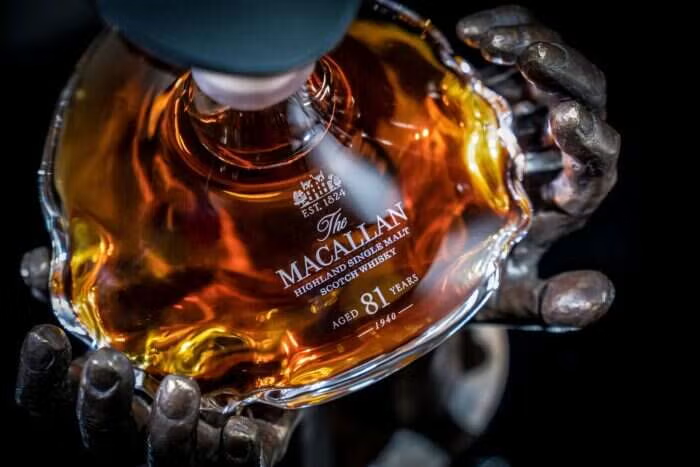
Have you ever pondered why some whiskies evoke the sweetness of honey, while others transport you to a cozy campfire? It’s like exploring a sensory adventure! Tasting notes serve as a guide, offering a sneak peek into the flavors and characteristics that make each whisky distinct. From luscious fruity pears to indulgent rich chocolate, every note shapes your tasting journey.
The aroma, often the first impression you get, is so important in influencing how we experience these flavors.
For example, a whisky matured in a bourbon cask typically carries delightful hints of vanilla and caramel, enriching its overall flavor profile.
What’s really fascinating is how different distillation methods can impact the flavor profile. Did you know that the finish of a bourbon cask influences its aroma and flavor profile, contributing distinct characteristics to the whiskey?.
Smoothness Vs. Smoky Flavor Comparison
Choosing your favorite whisky can feel a bit like picking a favorite child—there are so many different nuances to consider!.
Conversely, the richness that comes from smoky flavors can whisk you away to Islay’s rugged coastline, where peaty notes reign supreme.
Each sip reflects the distillation process and the unique terroir from which it hails, appealing to a wide array of enthusiasts.
Ultimately, your preference may hinge on whether you’re in the mood for something light and smooth or something bold and smoky.
AspectEnthusiasts of the distillation process appreciate how terroir influences aging and contributes to the richness of the final product.
Characteristics Of Irish Vs Scotch Whisky

Whisky enthusiasts often find themselves captivated by the distinct personality each variety brings to the table. Have you ever stopped to think about what makes Irish whiskey so different from its Scottish counterpart?
For starters, Irish whiskey tends to shine with sweet notes, a characteristic many attribute to its triple distillation process.
This method not only removes impurities but creates a delightful, lighter flavor profile that appeals to many palates.
Conversely, Scotch whisky offers a bold experience with its smoky flavor, often infused with peat, making each sip a delve into its rich heritage.
Cask aging plays a significant role in flavor development for both types. Did you know that the choice of wood can completely transform the end product? Irish brands frequently utilize ex-bourbon casks, while Scotch may often come with sweet notes and a spicy finish, showcasing the heritage of the brands crafted in copper pot stills.
Regional Differences In Whisky Traditions

Have you ever noticed how a single spirit can take on such diverse flavors depending on its origin? The nuances of production across different regions can lead to remarkable contrasts. Each locality boasts its own traditions, which ultimately shape the flavor complexity of the whisky.
For example, climate plays a significant role during maturation periods, influencing how a whisky develops its unique character.
Take Scotland, where you’ll often encounter bold, peat-smoked drams that deliver a punch.
On the flip side, Irish whiskeys typically lean towards a smoother, sweeter profile. These delightful differences not only elevate your appreciation but also spark engaging conversations among enthusiasts.
| Region | Flavor Profile | Key Influences |
|---|---|---|
| Scotland | Bold, peat-smoked | Climate, production traditions |
| Ireland | Smoother, sweeter | Climate, production traditions |
| USA | Rich, caramel notes | Climate, aging in new oak barrels |
| Japan | Delicate, floral | Climate, craftsmanship |
Conclusion
Reflecting on our journey through the world of whisky, it’s impressive how these spirits encapsulate rich narratives through their diverse styles.
- Key Flavor Elements: Each whisky showcases unique traits, influenced by the culture and artisanal techniques behind its crafting.
- Production Insights: The art of distilling and the selection of casks significantly shape the character of every type of whisky.
We’ve explored how regional differences impact flavor profiles and preferences among whisky enthusiasts. The distillation methods and maturation practices are integral in shaping these remarkable drinks.
Geographical influences play a significant role in defining the identity of each whisky style, making it a reflection of the local culture, artistry in artisan distilling, and the preferences of tasting panels that evaluate its diverse styles and types.
Originally posted 2025-01-12 11:24:06.